
The Truth Behind Silicon Valley’s AI Layoffs it wasn’t long ago that Silicon Valley was the dream destination for tech talent across the globe. A land of innovation, disruption, and opportunity, where coding wizards and product geniuses shaped the future. But in recent months, headlines have painted a different picture—one filled with pink slips, restructuring, and quiet exits. Welcome to the age of AI layoffs in Silicon Valley.
As AI continues to evolve at breakneck speed, it’s not just transforming industries—it’s transforming job security, workforce expectations, and the very fabric of the Valley’s culture. What once felt like a paradise of stability and cutting-edge ambition is now facing a reckoning.
Let’s unpack the reality behind this shift, uncover the human stories, and explore what it all means for the future of work.
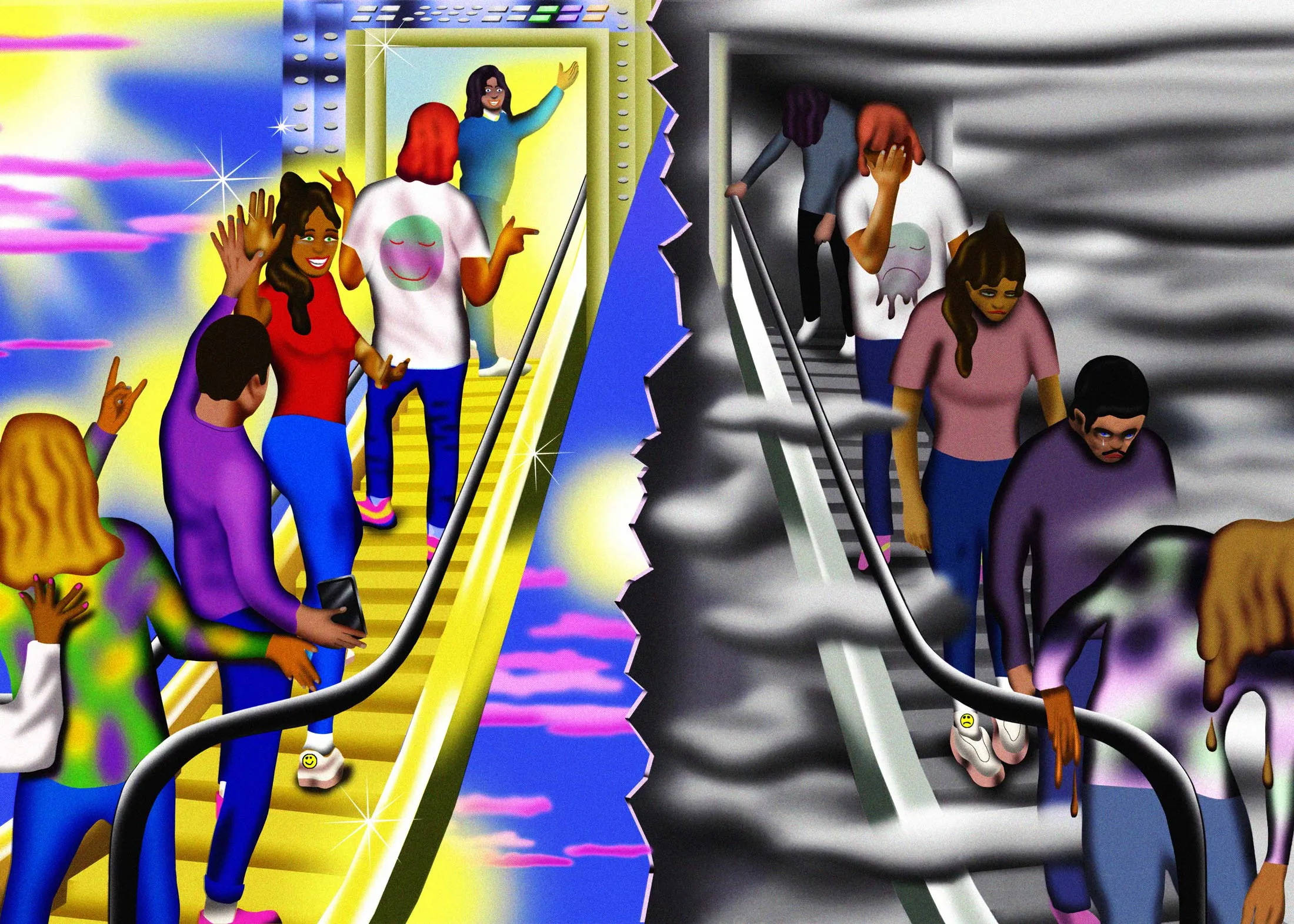
A Changing of the Guard
At first, AI was seen as a helpful assistant—an enhancer, not a replacer. It powered smarter search engines, improved customer service bots, and sped up coding processes. But as machine learning models matured, their capacity to perform complex, cognitive tasks grew.
Now, companies in the Valley are no longer simply using AI to boost productivity—they’re using it to replace entire job functions.
Engineers, data analysts, and even product managers are discovering that AI can do in seconds what once took them hours. And so, with CFOs watching the bottom line and investors craving faster returns, the math starts to speak louder than loyalty.
Thus began the wave of AI layoffs in Silicon Valley.
Not Just Junior Roles
One of the biggest surprises? It’s not just entry-level jobs being affected. Senior developers, team leads, and even long-tenured employees at top firms like Google, Meta, and Salesforce have found themselves cut.
Why?
Because AI is disrupting traditional hierarchies. Tools like GitHub Copilot, ChatGPT, and Claude are giving mid-level workers superpowers—allowing them to produce senior-level work without the years of experience. In turn, managers are forced to ask: Why keep layers of senior staff when a leaner team armed with AI can deliver similar outcomes?
Of course, this efficiency comes at a cost—one that doesn’t always show up on a spreadsheet.
The Psychological Toll
Layoffs are more than just economic events. They affect mental health, workplace culture, and trust. The AI layoffs in Silicon Valley have sent shockwaves through the tech community. Slack channels are filled with farewells. LinkedIn posts read like digital obituaries. Coffee shop whispers in Palo Alto are now tinged with anxiety rather than ambition.
Talented professionals who once felt safe are now questioning their relevance. And with every new AI model launch, there’s a lingering question: Will this tool make me obsolete?
The Irony of Automation
It’s a bitter twist—many of those now laid off were the very people who built the tools automating them out of a job. Engineers who trained AI to write code are now watching that same AI reduce demand for their roles.
This is the paradox of progress: In building smarter machines, we’ve reshaped the value of human labor.
While automation is not a new phenomenon (remember the industrial revolution?), AI’s speed and scope are what make today’s layoffs so disruptive. It’s not just blue-collar or repetitive tasks being replaced—it’s white-collar knowledge work, long considered safe.
Who’s Most at Risk?
While AI is reshaping many corners of tech, certain roles are more vulnerable than others. Here’s where the impact is being felt most:
- Software QA testers: Automated testing tools have matured rapidly.
- Customer service reps: AI chatbots can now handle nuanced conversations.
- Technical writers: AI-generated documentation is fast and scalable.
- Data entry clerks: Replaced by machine learning-backed automation.
- Junior developers: Coding assistants are cutting down demand.
But even mid-level project managers and UI/UX designers are feeling the heat, as AI begins to generate design prototypes, user flows, and agile task lists with minimal input.
The Role of Venture Capital
Startups are under immense pressure to become profitable faster. Gone are the days when VCs would throw millions at a “cool idea” and wait 10 years for a return. In today’s macroeconomic climate, capital is expensive, and every dollar must count.
AI offers an irresistible opportunity: scale without scaling the headcount.
Investors are nudging (and sometimes demanding) founders to embrace automation. That often means restructuring teams or replacing costly human resources with leaner, AI-driven systems. The result? More AI layoffs in Silicon Valley, even in early-stage startups.
Media’s Role in the Hype
Let’s not ignore the role the media has played in amplifying the fear. Sensational headlines like “AI Kills Jobs” or “Robots Taking Over Silicon Valley” generate clicks—but they don’t tell the full story.
While some of the news is based in fact, it’s often delivered without nuance. Not every layoff is AI-related, and not every AI rollout results in a job loss. But the constant stream of doomscrolling has created a cultural panic.
Ironically, this has also driven more people to explore AI tools—hoping to either future-proof their skills or join the creators, not the casualties.
A Boom in AI Startups
Here’s the twist: while traditional tech firms are laying off workers, AI startups are hiring.
The AI gold rush is in full swing. Companies building models, tools, infrastructure, and ethical frameworks are scaling rapidly. Venture capital is flowing into this space like water in the desert. Positions for AI prompt engineers, fine-tuning specialists, data labelers, and AI safety experts are popping up daily.
For those willing to reskill, there’s a whole new ecosystem of opportunity opening up.
Hope on the Horizon?
Despite the grim headlines, there are glimmers of hope. Entire industries are emerging in response to this shift:
- AI ethics consulting
- Human-AI collaboration design
- AI auditing and compliance roles
- Tech mental health services tailored for displaced or anxious workers
Startups are also beginning to develop tools focused on helping humans work with AI rather than being replaced by it. These platforms allow professionals to harness AI without needing deep technical skills—making it easier to stay relevant.
In education, bootcamps and online academies are racing to keep up with demand, offering fast-track programs on prompt engineering, AI data labeling, and even responsible machine learning. The appetite for learning is there, and it’s giving many tech professionals a second wind.
Companies Rethinking Their Approach
Some forward-thinking companies are realizing that indiscriminate layoffs are not a sustainable long-term strategy. They are instead choosing to retrain and reposition employees whose roles are threatened by automation. Rather than letting go of entire departments, they’re shifting people into AI-adjacent roles such as:
- Data curators
- Prompt engineers
- AI model explainers
- Ethics compliance officers
This proactive mindset is helping businesses avoid reputation damage while also building a workforce that’s equipped to thrive alongside AI, not be wiped out by it.
A Shift in Employer Branding
One side effect of the AI layoffs in Silicon Valley is the erosion of company loyalty. Once-prized workplaces are now being viewed with caution. Layoffs send a clear message—even high performers aren’t safe in an AI-driven future.
To win back trust, companies are rebranding themselves with terms like AI-responsible, human-first, or tech-with-heart. Employer branding has shifted from flashy perks to promises of stability and upskilling. This is more than PR—it’s a necessary shift to attract top talent in an era of tech anxiety.
What This Means for the Rest of the World
Silicon Valley has always been the trendsetter. What happens there rarely stays there. The AI layoffs in Silicon Valley are setting precedents that companies across the globe are watching closely.
If automation proves more profitable than human labor in California, it’s only a matter of time before similar strategies are rolled out in Berlin, Bangalore, São Paulo, and beyond. The ripple effect is real.
However, that also means the counter-movements born in the Valley—like ethical tech coalitions and AI transparency groups—will likely spread globally too. The Valley may be the first domino to fall, but it’s also where the first lines of resistance are being drawn.
The Skills That Can’t Be Replaced (Yet)
Despite all the disruption, some skill sets remain uniquely human. These include:
- Empathy and emotional intelligence
- Complex interpersonal negotiation
- Contextual creativity
- Moral judgment
- Cultural nuance
While AI can mimic patterns, it struggles to generate truly original thought or deeply contextual human insight. These abilities are becoming more prized than ever in hiring decisions. People who master both human-centric skills and AI fluency are expected to lead the next phase of Silicon Valley’s evolution.
Preparing for the Future: Practical Tips
If you work in tech or adjacent fields and feel uneasy about your job security, now’s the time to act. Here are a few proactive steps to stay ahead:
- Learn how to use AI tools in your field. Don’t fear them—master them.
- Invest in soft skills like communication, leadership, and emotional intelligence.
- Network strategically—AI might be fast, but it can’t build trust like humans do.
- Stay informed about emerging trends through credible sources, not just hype.
- Consider lateral moves—from engineering to AI product management, or from marketing to AI training.
Those who adapt fastest will not only survive this wave—they’ll ride it.
The Human Side of a Digital Revolution
What makes the current wave of AI layoffs in Silicon Valley so poignant is that it touches the very people who once believed they were building the future. For decades, tech workers were seen as the untouchables of the modern economy. Now, they’re discovering that no job is entirely future-proof.
But within this uncertainty lies potential. Silicon Valley has always been a place of reinvention. Just as it pivoted from hardware to software, from desktop to mobile, it can now evolve into a hub where human ingenuity and artificial intelligence not only coexist but complement each other.
Final Thoughts
The rise of AI has brought with it a whirlwind of change—some exhilarating, some unsettling. The AI layoffs in Silicon Valley represent a pivotal moment in modern labor history. They are not just a tech story, but a human one.
For every job lost, there is an opportunity to reimagine work. For every task automated, there’s a new frontier opening. The challenge now is to build a future where progress and people move forward together.
Because while machines may process data, it is people who dream, empathize, and innovate in ways no algorithm ever could.


More Stories
Revolutionizing the Future: How Computer Technology is Redefining Our World
The Hidden Alchemy of Computer Software: Where Lines of Code Become Magic
Unlocking the Hidden World of Computer Software: Where Code Becomes Magic